


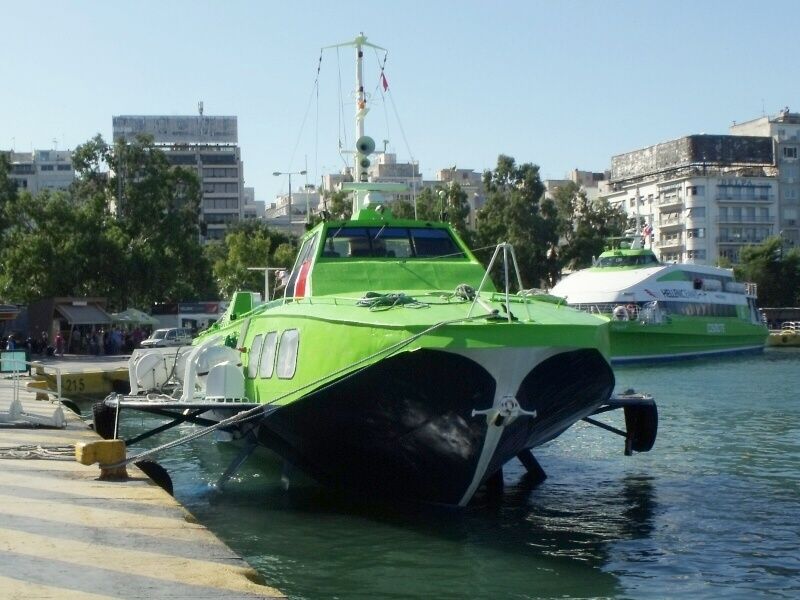
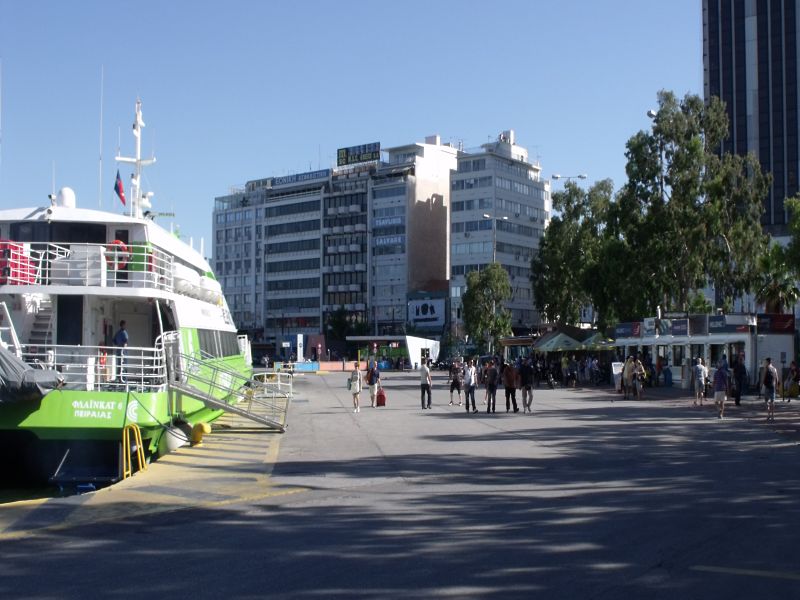
Poros - Poros, 7 nights The small town of Poros, which bears the same name as the island, is only 30 miles from Athens but a world apart. A popular retreat for Athenians, the island retains it’s “Greek-ness”, with a range of traditional restaurants, a fish market, and good selection of small shops providing the necessities of life. There’s also a good range of souvenirs, which are cheaper here than on the more touristy islands of Hydra, Aegina and Spetses. There is a choice of beaches close by, served by local buses, with water sports available for those that wish. The town is built on a hillside, so for some superb views (and excellent exercise), take a walk up the hillside to the clock tower which overlooks the bay, or hire bikes and explore the almost deserted north side of the island. Culture vultures will also want to visit the ruins of the Sanctuary of Poseidon, a few miles in land, as well as the small museum on town. There is also a monastery but it is not open to the public. As the sun sets, look out for the Sleeping Lady of Poros, as the outline of the hills makes the shape of a reclined and rather well endowed female (albeit these days with some wind turbines on her belly)! For those seeking some night life, there is an assortment of bars and a few small clubs on the front, with a larger club up on the hill at the east end. Those wanting to enjoy their sleep will be pleased to know the clubs are well away from the main yacht pontoons at the west side of town. The sole yacht base is reasonably quiet too. If you want to get out to the beaches, either anchor off, or take the buses from town. There are two buses; the white one heads east, out to the Monastery with it’s nearby beach, via Askeli, one of your options for water sports. The green one heads west to Neurion and Russian bays. They usually run hourly on the hour, though you may find the financial crisis has reduced the frequency. There are no bus stops – just stick out your hand to flag one down. If you’re fit, the beaches are walkable from town, though those in urgent need of a swim can do so off the rocks a couple of hundred yards past the east end of the quay. If the buses aren’t running or you want to head inland to the Sanctuary of Poseidon, there are taxis or you can hire mopeds and quad bikes from near the west quay and the new pontoons. Once away from the town and it’s beaches, it’s a very quiet place and the north side of the island is completely undeveloped. If you’ve got transport, you will find the beach at Vagionia Bay almost deserted. For such a small place, there’s a good range of shops, including a couple of excellent cake shops for those wanting to take some traditional Greek deserts home. Restaurants offer everything from gyros (kebabs) and pizzas, through traditional Greek tourist fare, to tapas style offerings, giving you the chance to try a number of small portions of fish, meat and vegetable dishes. Finally, if you want to visit Hydra or Spetses, but don’t fancy battling for space in these two busy harbours, Poros has a good hydrofoil service to both islands, so you can leave you yacht and have a day off sailing. Poros is an excellent start point for your Saronic or Argolic Gulf yacht charter, or if you’ve chartered from Athens, a must see destination. The nearest airport is Athens (Eleftherios Venizelos), one of the few positive legacies of the 2004 Olympics, served by a range of scheduled and low cost carriers (but not UK charter airlines who are deterred by the high landing fees). From the airport, the most pleasant route to Poros is by fast ferry from Athens’ main ferry port in Piraeus. However, the ferries stop around 7pm in high season, about 6pm in low season, so later arrivals may have to use land transport which is available around the clock. It’s not as complicated as it sounds but if it’s all too difficult don’t worry; if you’ve chartered a yacht from Poros the operators can arrange transfers for you. They arrange these at cost. If going via the ferry, the journey between the airport and port will be by taxi/minibus so works out more expensive than if you make your own way using the frequent Express Airport Bus or Metro. If going by road, they have an excellent deal with a local taxi firm – the only cheaper option may be a one way self drive car hire. If you would like a quote for the operators transfers, please let me know your flight details. They can also arrange transfers to/from Athens city centre hotels. Let me know the hotel name and address if you would like a quote for this. First you need to get from Athens Airport to the main port of Piraeus. You have three options: Piraeus, Athens: Poros ferries with a Flying Dolphin nearest camera and a newer Fast Catamaran behind At Pireaus, most of the ferries to Poros are operated by Hellenic Seaways, part of Blue Star Ferries. They depart from the quay between gates E8 and E9. It’s about a 2 minute walk from the bus stop or 10 minutes from the nearest Metro stations. The fast ferries (catamarans or hydrofoils) are painted red and blue (2025) and leave from the corner where the quay bends. The slower ferries (ships) are painted blue and leave from the quay area nearer gate E8. Fast ferry tickets can be booked in advance via the Hellenic Seaways website and this is recommended in high season, though the schedule (and so the booking facility) is not always available until a few months before departure. The fast ferries do get full in high season, especially the later departures – I’d aim to book at least a week before you travel. Tickets are 36€ one way (2025). You can now print your boarding card on line then just turn up and board. However, note that the ferries aim to leave at the scheduled time, so the boarding ramp may be removed 5 minutes earlier. If you’ve not booked ahead, tickets are sold at the booths opposite the ferries. In high season when the ferry may be full, aim to get there at least half a hour early – there are often some tickets returned. I’ve never known the slow ferry get full but if you want to check times and prices the operator is Saronic Ferries. They are often notoriously late issuing timetables but the usual departure is around 09:00-10:00 in the morning, too early for most Saturday flight arrivals. Note there are two new upstart fast ferry companies; Alpha Lines and Magic Sea, both of which offer a limited (one trip per day) service to Poros. These depart around 15:00 and 16:00 respectively (2025). Piraeus, Athens: Poros ferry tickets are sold at the booth, right, at the window nearest the camera. Fast ferries take about an hour and are 36€ (single). There is talk of them offering reduced rates for return tickets (2025). Slow ferries take about 2.5 hours but cost around half the fast ferry fare. Fast ferry tickets have seat numbers. These are fairly universally ignored, but don’t be afraid to invite people to get out of your booked seats – they will have seats reserved elsewhere. Don’t get off at the wrong island – some ferries stop at Aegina and/or Methana en route to Poros. On disembarking in Poros, turn right and walk along the front – the charter base is about a 10 minute walk. If you want a taxi, get off the fast ferry and turn left to the taxi rank (or from the slow ferry just look out for silver Mercedes). Often a member of the base staff will meet arrivals and may organise a vehicle for the bags. I’m conscious the above makes it sound a bit of a palava but it’s really not as complex as it sounds. On the down side, it’s not fast if you’re unlucky and have to wait around at Pireaus for an hour or two for a ferry. Time to adjourn to one of the many cafe’s or bars! This requires less organisation but is more expensive and involves 2.5 hours sat in a taxi or minibus, despite the recent road improvements. You do however get a comfort break at Corinth, giving a chance to see the Canal. Alternatively you can hire a car. A taxi from the airport to Galitas will cost about 240-300€ (depending in part on the time of day). If you haven’t agreed a fixed price with the driver before you set off, make sure the meter is turned on! From Galitas it’s a short water taxi ride to go the few hundred metres across the water to Poros. The water taxis run pretty much around the clock and the fare is about 1.50 Euros. They drop off next to the fast ferry quay so turn right to walk to the charter base (it’s about 15 minutes), or left to the taxi rank. Note that the taxis on Poros do not run all night and you’re unlikely to find one after midnight. If you’re chartering from Poros and need a road transfer, I recommend you let the charter company arrange it. They have a deal with a local taxi firm that works out cheaper than just taking a cab of the rank at the airport. If you fancy driving yourself, Pop’s Car (I presume he only had one when he decided on the company name) offer one way hires between the Airport and Galitas, then take the water taxi across to Poros as above. A charming fishing village, Perdika is one of my favourite spots in the Saronic, with it’s row of restaurants on a terrace overlooking the harbour. Believe it or not, it also boasts the world’s first 360o camera obscura, essentially a huge pinhole camera giving an all around view. Perdika: The harbour, anchorage and village looking north Like many Greek villages, Perdika also has some ruins but in this case rather more recent. During the second world war, the original village on the south side of the bay was converted in to a German base and a strolling amongst the remains, the trenches and bunkers are still very evident. On the north side of the bay, the location of today’s village, a line of restaurants and cafes sits on a high terrace overlooking the harbour, an excellent spot for watching boats coming and going. Shopping facilities are very limited – you’re as likely to find a child’s fishing net as a lump of cheese in the general store, though there is a small bakery. There is a small beach at the back of the harbour but I wouldn’t recommend swimming from here due to residues from the many assorted vessels. Much better to swim off the rocks just outside the harbour. As with most Greek harbours, local boats occupy most of the space on the inside of the breakwater and the two quays. The seaward side of the breakwater is unusable for all but very large yachts due to the depths, so most yachts end up on the seaward side of the two quays. These berths are vulnerable to wash from passing ferries, despite the fact these pass so far out to sea they will usually be out of sight before the wash reaches the harbour. Keep your yacht well off the quay and ensure your anchor is well in. This means dropping the anchor right up beside the bows of the boats opposite. Perdika: The breakwater (left) and two quays, (centre and right) If berthing on the seaward quay, watch out for underlying rocks at the quay edge. There is one spot near the end of the quay where these are particularly prominent yet nearly every day, someone comes in late, fails to wonder why in the busy harbour this spot has been left empty and smacks their rudder on the rocks! They’re really really easy to see – you just have to look!! At busy times, you may want to consider going alongside the water tanker berth at the end of the seaward quay. You will however have to leave if the tanker comes and he sometimes comes very early in the morning. You could try asking the locals when the tanker is next expected but I’ve tried several times to establish movement times direct with the captain and even he didn’t seem to know when he was next likely to return! Palaia Epidavros: Harbour and town from the sea The main reason to pause your charter yacht in Palaia Epidavros is to see the impressive and well preserved Greek amphitheatre which dates from 4BC and is still used for performances in high season. There is also a sunken Roman villa just off the beach. However, town itself is pleasant enough and offers several restaurants and shops supplying basic provisions, as well as a couple of excellent bakeries and a small beach. There is also a diving school. There are no public showers but you may be able to persuade the hotel opposite the quay (behind the trees) to open a room for you. Mike/Maik’s restaurant on the front offers a good range of traditional Greek fare, as well as a nice spot for a beer as you watch the other yachts come in. There can be an uncomfortable swell running in to the bay during the afternoon but this generally subsides in the evening. Palaia Epidavros: The Amphitheatre is in superb condition The amphitheatre is renowned as the source for the saying “you can hear a pin drop” – the acoustics are certainly remarkable. Take a walk up to the top of the theatre and get someone to speak or sing from the stage to fully appreciate the genius of the designers who achieved 2500 years ago what modern sound engineers still strive for. There are other ruins around the site so you will want at very least an hour there. These include the Temple of Asclepius, god of healing and son of Apollo, and a sports stadium and baths. Excavations are continuing to reveal more of the rich history of the site The amphitheatre can be reached by taxi or you may be able to hire a moped in town. Some flotillas arrange coaches so you can also try to tack on to one of these groups – ask the Lead Crew. Taxis will take you up and collect you at a later agreed time. Palaia Epidavros: Harbour and town seen from the beach I would suggest you go late afternoon or early morning when it’s less hot and when you will also avoid the many coach tours from Athens. There never seem to be many taxis around so if going in the morning I suggest you book one the night before – just ask one of the drivers. Opening hours are around 8am to 7pm but the taxi drivers usually know the current times. Entrance to the site is 6€. Expect to pay around 25€ for the taxi (round trip). The only time you might want to avoid Palaia Epidavros is on Fridays and Saturdays in July and early August, when plays are put on at the amphitheatre. Some of the great and the good arrive by sea and less well connected visitors may be asked to leave. You can see the programme on the Greek festivals website, once the programme is announced each spring. The remains of the sunken Roman villa is just a few metres off Kalymnios beach. It’s only about 3m below the surface and the water is clear. Take a snorkel and mask for the best view. Epidavros: Bay seen from the fishing quay, port and starboard marks in the background There are in fact two Epidavros’s (or should that be Epidavri) – you want Palaia (old) Epidavros, not Nea (new) Epidavros. To add to the confusion you may also find the name spelt Ephidavros, Ephidvaro, Epidauro or Epidaurus. So make sure you go to the right place. The bay is not easy to spot from a distance but look out for the scar running along the hillside south of the town from the modernised road. As you get closer, the road can be seen heading down into the town. Head in to the bay between the two marks (the starboard one previously demolished by a drunken skipper). There is a light structure on the end of the jetty, though I don’t recall ever seeing it lit. First choice for moorings is to go stern to on the quay to the south of the jetty, between the fishing boats on the jetty side and those further south down the quay. A painted area marks the space for yachts. Note there is a lot of junk on the sea bed just south of the jetty so try to avoid laying your anchor too close to the fishing boats there and if you’ve a choice, take a berth further down the quay. Epidavros: Quay and jetty. The main yacht moorings are just out of shot, left. The other two mooring options are stern to on the end of the jetty or alongside the north side of the jetty. If using the end of the jetty, you’ll need plenty of anchor chain out – it’s deep here. The north side of the jetty used to be the hydrofoil berth though the town hasn’t had a service for some years now, despite the quay markings being repainted in recent times! Keep close to the quay as you come in as it’s shallow further off, and larger yachts may find insufficient depth at the inner end. Anchoring enthusiasts can find a spot on the south side of the bay, from where it is only a short paddle ashore. The bay can experience some uncomfortable swells in the afternoon but these generally die away in the evening. In jellyfish season (the area seems to suffer a plague of these about every three years) the water near the quay is packed with unfortunates that have washed in to the bay, never to depart. I once had and unusual engine failure here when one was sucked in to the water inlet, blocking the cooling system and destroying the impeller. I spend a none too pleasant morning purging the system of bits of impeller and lots of slimy pulped jellyfish! Just my luck – I’ve never heard of anyone else having a similar problem. A pretty village set in a well sheltered bay, Korfos offers few facilities beyond a clutch of restaurants and bars, and basic provisions, but is worth a visit. Unusually for the area, the quayside is controlled by the two restaurants who have laid mooring lines. Use their quay and you’re expected to use their restaurant. It’s a few years since I was last there but George at Stavedo, the western most of the two always bent over backwards to make us happy. The name of the place next door escapes me but suffice to say after several episodes of creative billing we gave it a wide berth. The bay is fairly easy to find. Beware the large reef off Ak Trelli, a mile or so east of Korfos. The reef extends further than is immediately obvious, especially if the sea is a bit choppy. The restaurateurs will hail you as you approach the village, usually waving their mooring lines in their hand, though as the season progresses, many of these get chopped by propellers so you may need to do a quick flypast to see whether you need your anchor or not. For those that don’t want to commit to the two quayside restaurants, there is plenty of space to anchor, giving you the freedom to dine where you wish. The beach around the bay is a safe place for children to play and swim. Aegina town, on the island of the same name, is known for its pistachio nuts and natural sponges. Aegina: Fruit and veg boats in the harbour Alongside the harbour front cafes you’ll find an excellent fish market complete with several fish restaurants, and boats on the quay selling fruit and veg. One can’t help but think the fruit should be in the market and the fish on the boats, but that’s how it is! Much of Aegina town is dedicated to the weekend tourist trade from Athens, with souvenir stalls in abundance and horse and carriages trotting up and down the quayside. The front is lined with restaurants and cafe’s and at night the noise from the bars may disturb light sleepers moored on the quay opposite. Those who prefer a quieter night should take a spot on the other side of the harbour. However, Aegina isn’t just a tourist town. Step in to the back streets and there are shops selling everything from mobile phones to garden chairs. Head inland and there’s plenty to explore. There’s also good ferry service to Athens should you need to change crew. Aegina: The monastery of Agios Nektarios If you’re looking for gifts to take home, (or to consume during your trip), skip the usual tourist tat and buy some pistachios, which are still grown locally. (Note to skippers; the shells seem to have a mind of their own so discipline your crew before any consumption on board or you’ll be picking shells out of the bilges, lockers and everywhere else for the rest of the trip). Natural sponges are also a good buy in Aegina, though they are unlikely to originate from the area, sponge fishing having died out. There are several beaches around the island, the nearest, Avra, a short walk north of the harbour. Culture vultures are well catered for too and if you fancy a day off sailing, Aegina is a good place for it. Towards the centre of the island is the impressive monastery of Agios Nektarios, reachable by taxi or the bus to Agia Marina (which isn’t a marina)! Adjacent to the monastery are the remains of the medieval village of Paleachora, previously the islands capital. These include 33 churches you can visit, all that’s left of the 365 that were allegedly once there. Somewhat older is the Temple of Afia (or Aphaia), dating from the 5th century BC. This can also be accessed via the Agia Marina bus though there are only two a day. Aegina: The Temple of Afia (Aphaia) The cunning take the first bus (around 11.20 from the bus station next to the harbour) to the Temple, catch the second bus back to Agios Nektarios, from where there is a more frequent service back to town. Alternatively, why not hire mopeds and explore the island at your own pace. If that isn’t enough, Aegina offers two annual festivals. An International Music Festival runs through August with events on Avra beach, just north of the harbour. For more details see the Music Festival website. There is also an annual Pistachio Festival (I kid you not) in late September. Aegina: The harbour (centre) and marina (right) entrances, with the red cupola Getting to Aegina is easy – you can see the ferries and hydrofoils going in and out (beware hydrofoils reversing out of the harbour) and the reddy orange cupola is also very visible. If coming from the south beware the reef that runs across to Angistri. There’s a big gap but you will need to do a bit of navigation. Head in to the inner harbour, passing the entrance to the marina on the right. The marina is reserved for local craft. There is often a swell just outside the harbour in the afternoons and you may prefer to rig fenders and lines inside the inner harbour – there’s plenty of space to float around. Smile at the small white church on the left quay as you enter – a photographer often lurks there and will appear with large prints for you to purchase once you’ve moored up. You can moor on the north quay, or for a quieter night (but a longer walk to town) on the opposite side, either on the quay (beware the slip at the east end) or on the pontoons if you can find a gap. The afternoon winds blow across the harbour and can be gusty so Aegina rewards good boat handling. However, there’s plenty of room if you have a bit of a loss of talent on the way in. Lay your anchor a bit up wind and put out a decent length as the holding is only average. Vathi: The village and harbour Vathi is a sweet little place with just three or four restaurants, no shops, one bar and a volcano (inactive)! It’s a small fishing harbour with limited space so one to avoid on Friday and Saturday nights when it gets over run with boats out from Athens for the weekend. The first couple of restaurants nearest the harbour mouth are unremarkable but the third is a gem. The lady grows many of her ingredients and she may take you out the back to meet her chickens. It’s a friendly laid back little village, if a little hicksville. One member of my team christened it the land of the six fingered banjo player, which is perhaps a little harsh but gives a flavour of the place. There really are no shops (though the vegetable van may call by) and it’s a fair walk over the peninsula to Methana so make sure you are adequately provisioned before you arrive. There’s water on the quay and an open air shower. There’s a functional but rather gritty beach just south of the harbour which provides a better swimming venue than the harbour. Highly recommended is a walk up to the volcano, a fact that seems to have escaped all my hostesses over the years. Wear some decent footwear though – this is not sandal country. Vathi: The unusually empty harbour Vathi will always stick in my mind as the only place I’ve ever had to put a yacht aground to stop it sinking (not my boat I hasten to add). It says something about the place that the restaurateur didn’t bad an eye lid when we ran in and whipped a cloth off a table to bung up the split transom! It was also my first ever stop as a Flotilla Skipper, and I had the joy of being cheered on by the locals as I did battle (verbally) with the Athenian owner of a large motor yacht whose lines were blocking half the harbour. I eventually prevailed but it wasn’t the easiest start to my skippering career! Vathi: Fishing quay with harbour entrance behind The harbour breakwater is easily spotted as you head south down the side of the Methana peninsula. Contrary to first appearances, the entrance is at the south end of the breakwater where there’s a white post, not at the north end. Keep to the middle of the entrance as it’s shallow at the sides. There’s not much room inside, so you may want to let anyone already in the process of mooring sort themselves out before you enter. Moor on the south quay, dropping your anchor right across the other side of the harbour next to the fishing boats. A chap called Costas, often sporting a T shirt proclaiming his role as harbour master may direct you in to a spot. If mooring at the inner end of the quay, watch your rudder – it’s shallow close to the quay. The shelter is excellent but with the limited space, crossed anchors are common so keep an eye on what’s happening when it comes to departure time. If you’re the yacht on the end of the quay near the harbour entrance you might also want to watch out as people enter as I have had my anchor hooked by boats entering the harbour. Poros is separated from the mainland by a channel a few hundred metres across with a shallow area at the South East end. The town can therefore be approached from the east, keeping north of the rocks just west of fortress island of Nisos Bourtzi, or from the west. Generally, if you’ve been cruising south of Poros, you will arrive from the east, if you’ve been sailing to the north, you’ll arrive from the west. The channel is busy with ferries and hydrofoils passing in both directions, small passenger ferries and larger car ferries shuttling between Poros and it’s mainland sister town of Galatas, and yachts arriving and leaving the quay. So keep a good lookout and don’t forget to look behind you as well as ahead. It can be daunting to see a ferry heading towards you but there is plenty of room for you to pass, provided you keep to the edge of the channel. Poros: View looking NW up the channel. The charter base is bottom left. The channel follows the line of the quay, kinking north then south again. If you attempt to take a short cut across the southern half you will go aground. This is particularly tempting if you arrive from the east as you will see yachts on buoys opposite the charter base and many more further down, but between the two it is shallow. The bottom is soft so you will be unlucky to do any damage but the water taxis make good money towing people off – they don’t do it for free! They seem to get at least one customer a day in high season, sometimes more. I watched two yachts in succession do it last June and even Flotilla lead yachts have been known to end up there! The chart is clear and if you haven’t bothered to check it I suggest you go slow so at least you have a chance of getting yourself off without assistance. Keeping your speed down in the channel is wise anyway – the locals get fed up with people tearing through putting up unnecessary wash. If you’ve chartered from Poros, the company’s quay at the east end of the channel is available for your use but make sure there is a member of staff around to help you in – there’s a technique to dealing with the crosswinds and strong currents that sometimes come down the channel! Mooring here is on mooring lines. Poros: Pontoons, looking north towards the car ferry dock and Naval College If you’ve chartered from elsewhere, use the new pontoons and quay at the west end of town which have water and electricity available. There are a few mooring lines on the pontoons, though these seem to be disappearing at a rate of knots, certainly far faster than thy’re being repaired! I would suggest you avoid going stern to on the south quay, between the charter base and the water ferry landing spot. Aside from the large swell put up by passing ferries, which will be with feet of your yachts and challenges the most well set anchor, the bottom is strewn with all sorts and fouled anchors are common. There’s nothing to get the adrenalin going like pirouetting around your stuck anchor mid channel as a ferry bears down on you! There are a few spaces here where you can go side too (near the main square) but yachts usually raft out here so be prepared for company, and a lot of noise from the bars nearby. You will find it quieter on the quay and pontoons on the west side. If you prefer anchoring, most of the bays are fine for daytime stops, with the bays west of the town offering better shelter if you’re staying overnight. In fact if you’re the type who has always worried about spending a night on the hook, these are excellent places to build your confidence, with virtually all around shelter and good holding. In high season you will need to take a line ashore as you’re unlikely to be alone.
Distance: short Difficulty: Easy
Day Miles Destination
1: Sat 0 Check in.


Getting there by ferry
Getting there by road
2: Sun 10 

3: Mon 14 


4: Tue 10
5: Wed 15 


6: Thu 14 


7: Fri 20 

8: Sat 0 Check out and depart